“This required a grassroots presence that we now have in every single state, this army of badass women fighting every single day.”
Shannon Watts is the founder of Moms Demand Action, author of “Fight Like A Mother” & a generationally-important activist on the issue of gun violence. We discuss the extraordinary progress made by her and her team in the past 6.5 years against the National Rifle Association & towards a safer gun culture in the United States, as well as look into the creation of one of the largest grassroots movements in American history
Key Learnings
1. Shannon’s vision of where the movement is and identifying where and how to play offense and play defense
2. Why Shannon, her team, and the entire movement will not be intimidated & will stay on message
3. The importance of being a non-partisan organization which welcomes anyone into the coalition
4. Barriers to progress aside from the NRA
5. Preparing for the 2020 Presidential election cycle & seeing candidates mirror the message of Mom’s Demand Action
6. Which convention would Shannon prefer to speak at?
7. Leveraging her memory and her training to tell high impact stories and hold people accountable
Esther Choo is an Emergency Medicine physician, a founder of TimesUp Healthcare, and a cornerstone voice driving progress in our profession. She is a remarkable voice on social media, on stage, and in the press. Her research, creativity, and passion are rocket fuel for change; she is highly sought-after and after speaking with her it is clear why!
Key Learnings
1. Being one of the key influencers for our profession on social media and beyond
2. The moment her social media presence took off and comparing impact to writing for academic publication
3. Reconciling tension between effort and visibility
4. How Esther deals with, learns from, and ignores criticism on social media
5. The art of sharing controversial and provocative takes and trusting your audience will provide guidance on “bad” takes
6. Her path to becoming a student, expert, and spokesperson around issues of gender bias
7. The formation & mission of TimesUp Healthcare and the historical foundation it is built upon
8. Sharing stories of curtailed opportunity, gender-based discrimination, and the loss of so many talented women who left the profession
9. Speaking outside of the echo chamber to audiences on challenging subjects and her techniques for disarming a crowd
10. Starting Equity Quotient and developing metrics and measurements around discrimination and harassment
11. The sensation of being “in demand” and turning it into an opportunity to elevate others
“I remember him turning to me and saying ‘Hey Doc, you ready?'”
Claudia Schaffner is one of the first women in our nation’s history to be awarded the Combat Medical Badge, which she earned for her service as a medic under fire with the 1st Armored Division during Operation Iraqi Freedom. She joins us to discuss her experiences in combat and being a groundbreaking woman in the United States Army. She also shares how the CMB connects her to her Grandfather, who won the same award during World War II. This is a remarkable conversation with a brave soldier and great leader.
Key Learnings
1. Preparations and training for her first deployment in Iraq and realizing that she would be going into combat
2. The moment she first answered the call for aid in combat
3. One story…
4. The meaning of the Combat Medical Badge
5. Hearing that she was initially not receiving a CMB while men who had done the same work were receiving one, then subsequently learning she was receiving one as well
6. The “Stars & Stripes” article summarizing the award ceremony where Claudia and her teammates received the CMB
“This is about trying to shatter all myths, all notions about gender equity within these institutions of medicine, of science, of global health”
Jocalyn Clark is the Executive Editor of The Lancet and has her PhD in public health and women’s studies. She joins us to discuss how to drive international change around gender equity & the exceptional 2/9/19 Lancet issue, the impatience she and her team feel, and why change must come from institutions.
Key Learnings
1. A snapshot of The Lancet’s background, the current pivot in content, and the dedication to providing excellence in science along with analyzing the world’s most pressing issues.
“My favorite speeches are when I go to places that aren’t receptive to the climate justice message and I can just school them.”
Jamie Margolin is the founder of Zero Hour, creator of the upcoming World Climate Summit, and one of the world’s most important climate activists. She’s also getting ready for her senior year of high school. We discuss how she rose to prominence, the goals of the World Climate Summit, her incredible Teen Vogue article, and her ability to seek out and handle confrontation. An amazing conversation with an exceptional leader.
Key Learnings
1. Seeing natural beauty juxtaposed with clear evidence things are wrong with the environment
2. Sharing a feeling of existential dread
3. Getting some reps in local politics and building off how the 2016 presidential election made her feel
4. How Jamie started with social media and learning to leverage those tools to drive her work
5. Creating a vision for a youth climate march and executing on the vision to create (link) youth climate march
6. The incredible leadership skill set she has developed
7. The goals of the Youth Climate Summit
8. Applying for college and her remarkable Teen Vogue article
9. Her ability and desire to step out of echo chambers and confront people and organizations
10. Dealing with all of this work and still being a high school student
Links
Zero Hour: http://thisiszerohour.org/miami/
The Youth Climate Summit: http://thisiszerohour.org/miami/
Seth Hain is Vice-President of Research & Development and Chris Mast is a Family Medicine physician & Vice-President of Clinical Informatics at Epic. They join for a candid and broad conversation of the current state and future goals of Epic. We also cover their understanding and perspective of challenges and frustrations coming from end users. Epic staff very rarely do any kind of press, it was absolutely fascinating to get behind the curtain.
Key Learnings
1. Background on rise and growth of EHRs, affirming that we are not going back to paper charting, and identifying points of tension
2. What is their sense of the “temperature” of the end-users of Epic and the barriers keeping us from the ideal future state
3. Closing the training, implementation, and experience gap
4. Steps to build and rebuild perceptions and trust
5. What they see and hear from the peer-reviewed literature and social media regarding the work they do
Warren Binford is a Professor of Law at Willamette University and an internationally recognized children’s rights scholar and advocate. She was part of a group that recently toured the Customs and Border Patrol Detention Center in Clint, Texas where hundreds of children who have been separated from their families are being held. In this episode we discuss what she saw, what she heard from the children, and where concerned people can channel their energy to help drive change.
“You can’t lead others until you understand how to lead yourself”
Mark Hertling returns to Explore The Space to discuss leadership through the prisms of character and resilience. His insights from a career as an officer & 3-star General in the US Army and his current work training physician leaders are truly remarkable. We cover character, servant leadership, resilience, and many other essential elements of leadership.
Key Learnings
1. The value of getting reps & being humble, positive and reinforcing when starting out on a new media journey
2. Building new cultures with the inclusion of many different cultures and perspectives to get the best ideas to move forward
3. Defining leadership through an individual’s character and what character means
4. Understanding your own character and when you are ready to lead by harvesting feedback and perceptions from others
5. Being a 22 year old Lieutenant leading a tank platoon, then 40 years later leading US Army-Europe as a 3-Star General and how character drives decision making in either setting
6. Our shared central dogma of decision-making: patient first, team second, individual third, also known as servant leadership
7. The stressors of competing requirements that can push against a central dogma, and how character and self-reflection can help keep someone on tract
8. Some excellent social media usage rules to live by
9. Wherein we tackle the concept of resiliency and the challenge of trying to define the term
10. How resiliency is and is not connected with burnout
11. Why Mark says being a doctor is harder than being a military officer
“The best antidote to a feeling of despair is progress, and that’s what we are seeing now”
David Wallace-Wells is a Deputy Editor & climate change columnist with New York Magazine & the author of “The Uninhabitable Earth” a book which caused a tremendous stir around where our planet is heading due to climate change. We discuss overcoming complacency, why we should end fossil fuel subsidies, and the importance of progress and discussion to overcome despair. His sense of urgency and clarity of message is incredibly compelling!
Key Learnings
1. How the book has been received, and how it’s a reflection of how serious climate change is being viewed
2. Honing in on the impact the book and the response has had on David himself
3. The ripple effect from the UN Report on Climate Change using alarming and clear language and how his book has served as an accelerant
4. Being both a journalist and an activist
5. Reflecting on how we viewed climate change during the 1990s, how complacency reigned, and how complacency can be overcome
6. Data behind the horrifying trajectory of natural disasters including wildfires in California, the warming track we are on now, and the projected toll on human life
7. Why ending fossil fuel subisidies is David’s first step towards rapid change
8. Why we need to focus on large scale changes we can enact through new policies and the vital need for individuals to participate in driving political action around climate change
9. Resources for learning more and the importance of talking about climate change with one another!
“We actually do this well, and it’s good to be able to do this well when you’re the safe place for the community.” Vicki White is the Chief Nursing Officer at Santa Rosa Memori...
“The #1 question that I have gotten over the past few years is ‘What gives you hope?'” Dr. Katharine Hayhoe is a climate scientist and Professor at Texas Tech University. She is also...
“We are incredibly passionate about it because we think it’s the future” Dr. Renee Dversdal is an Associate Professor of Medicine & Director of Point of Care Ultrasound at Oregon...
“My approach is to give someone a chance to say Yes” Dr. Umbereen Nehal is a pediatrican and physician executive. She is also the physician Jedi Master of LinkedIn, having been named a Lin...
As October is Breast Cancer Awareness Month, I would like to re-release an earlier episode of Explore The Space podcast featuring Jessica Shapiro. She’s a breast cancer survivor, the voice of th...
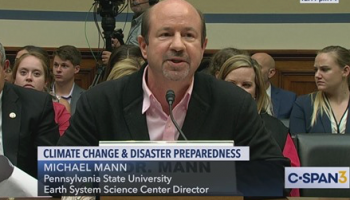
“Our stewardship of this planet shouldn’t be a partisan matter.” Michael Mann is a Distinguished Professor of Atmospheric Science at Penn State & is one of the most articulate an...
“There’s something special about this” Tony Breu is a Hospitalist and medical educator whom I have affectionately termed the Championship Belt Holder for creating threads of informat...
“There’s something exciting about gathering together in a room and sharing that space” Emily Silverman is the creator and host of The Nocturnists, which is wonderful and great and on...
“How can you converge to solve things in new ways, to get people to say “Yes, and?” That’s where the rocket fuel comes from” Daniel Kraft is a Bone Marrow Transplant phys...