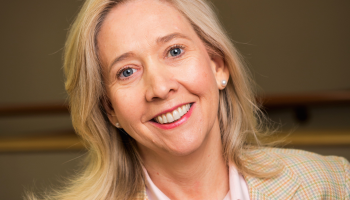
Avital O’Glasser is a leading physician on Twitter who is helping to drive a rapidly evolving revolution in medical information exchange. She is also Associate Professor of Medicine & Associate Program Director for Scholarship & Social Media at Oregon Health Sciences University. She joins us to discuss how Twitter & social media can help harness the positive & overturn outdates norms in communication and education.
Key Learnings
1. What is actually happening in medicine with social media, using conferences as a specific example
2. How #MedTwitter has “harnessed the positive” of social media
3. The power dynamic change where student and teacher on social media are completely reversed in the hospital & how old norms are being detonated
4. Wherein Mark admits he doesn’t know what “meta” means
5. Accessing conversations and personalities from all around the world just by using a hashtag
6. The standard way information in medicine is presented and the opportunity social media provides to upend this
7. Tracking metrics and measuring impact on social media vs journal articles vanishing into PubMed hell
8. The new reality of social media & medicine as reflected in new leadership posts and the incredible bandwidth a single tweet can get
9. Ways in which social media can drive change in medicine around gender equity & underrepresented minorities
10. Getting a sense of what is starting to happen here
Alin Gragossian was in the middle of her 3rd year as an Emergency Medicine resident when she became critically ill & required a heart transplant. She joins us 10 weeks after surgery to discuss her extraordinary journey. I laughed the hardest and cried the most I ever have during a podcast. She’s a wonderful storyteller & this story is like no other.
Key Learnings
1. What it feels like to go into cardiogenic shock & think you’re about to die
2. Being in the prime of life, and then a cough starts…
3. In the ED, knowing something is very wrong and not wanting to accept it
4. The experience of having doctors she knew and worked with and how she wanted the communication to work
5. Living like an anaerobe
6. Being “lined up”
7. Learning there’s a heart for her and actually going to the OR for transplant
8. High-fives to Linda
9. What it feels like to breathe and to walk again
10. How a near-death experience changed how she looks at life & showed how much a human being can overcome
Vinny Arora and Charlie Wray, both hugely important scholars and personalities in the world of Hospital Medicine, join to discuss a hotly debated topic: do Social Media activities belong on a professional CV? We set out to write the White Paper, we were successful. This is an outstanding and important discussion!
Key Learnings
1. The origins of the debate around putting social media activity on a professional Curriculum Vitae
2. Leveraging impact as a major determinant of whether to place something on a CV
3. Changing the academic “coin” of how to differentiate yourself when applying for a position
4. The fundamental categories that could and should be included from social media onto your CV
5. The single most important thing you can do with content and your CV
6. Deep-diving into how to evaluate impact of Twitter feeds & contributions, along with a serendipitous paper reference!
7. The key elements needed to determine whether or not Twitter contributions should be used on a CV
8. Shoutout to the wonderful work of @tony_breu on Twitter & an elegant discussion of how content contributions build off one another and “mission-based tweeting”
9. Why early Twitter adopters like @seattlemamadoc, @doctor_V, @kevinMD & @futuredoc all used monikers instead of their real names
10. Elements to avoid putting on a CV because either not appropriate or not ready for prime-time
11. Identifying potential conflicts of interest, particularly among product endorsements
12. The importance of leveraging a CV as a tool to differentiate yourself from other candidates
13. What should this section be titled on a CV and where on the CV should it land?
14. The importance of social media as a tool to move a field of work and the wave of change that is coming
15. The White Paper findings!
Links
How to find Charlie on Twitter: @wraycharles, @JHospMedicine
How to find Charlie and Vinny’s Twitter Chats: #JHMchat
How to find Vinny: Twitter: @futuredocs, LinkedIn: VinnyMArora, YouTube
Dr. Arora’s co-authored paper on social media analytics
Emily Gottenborg, Christine Jones, Marisha Burden and Anna Maw are Hospitalists at the University of Colorado and all have had children at some point during their careers. They came on the podcast to discuss their paper “You Can’t Have It All” which looks at the inequities and problems women face when they have children while practicing medicine. An unsparing and inspiring conversation, just like the paper itself.
Note: co-authors Li-Kheng Ngov & Anastasiya Ponomaryova were not able to join this interview
Key Learnings
1. The origins of this incredible paper, especially their shared memories around parental leave (or lack thereof)
2. Framing the paper as a scientific article, then rapidly evolving to one sounding an alarm
3. Using qualitative research and allowing the stories to guide the conclusion
4. The emotional rollercoaster of collecting data, doing the study and identifying inequities in the system
5. The impact of feeling like having children is a choice therefore all the inequities that followed are the fault of the mother for making that choice
6. Releasing the article and embracing the response and the catharsis
7. Dealing with the fear of losing jobs around bringing this material forward and moving past just “being a good soldier” and being a “troublemaker”
8. The unique challenges of being in medical training and starting a family
9. Immediate feedback when the paper was presented at Grand Rounds
10. Progress around paid time off, resources and space for pumping, and work still to be done
11. Crossing from publishing research into becoming activists
12. Moving forward into progress on a huge problem, finding solidarity and sharing information
13. Creating connections across the country through different parts of the work moving forward and where do we find examples of places doing this work well
14. Attrition of great minds and talents from medicine due to gender inequity
Links
The article “You Can’t Have It All” https://www.journalofhospitalmedicine.com/jhospmed/article/189543/hospital-medicine/you-cant-have-it-all-experience-academic-hospitalists
Division Of Hospital Medicine at University of Colorado: http://www.ucdenver.edu/academics/colleges/medicalschool/departments/medicine/GIM/ClinicalCare/HospitalMedicine/Pages/HospitalMedicine.aspx
Vivek Wadhwa is a Silicon Valley futurist, renaissance man, & raconteur. He joins us for an provocative & rollicking discussion of artificial intelligence in healthcare, the current and future state of health data privacy, & how his personal journey spurs his work. He brings a sense of urgency and enthusiasm to this topic, and shares why he feels that way. Caution: hot takes ahead!
Key Learnings
1. Laying out the underpinnings of a revolution in the next 5-10 years
2. The idea of having sensors on our bodies measuring and tracking our biometircs
3. Miniaturization and nano-bots providing targeted therapy
4. Genomics and the impact of massively decreased costs
5. Connecting these three components with artificial intelligence to build a data-driven revolution in healthcare
6. Are tech companies putting patients or plunder at the center?
7. Vivek gives the most succinct assessment of privacy concerns and health data you’ll ever get.
8. How we can get a “Democratization of diagnostics”
9. Helping to define AI as a tool for pattern recognition and data analytics
10. What the role of the physician will be in this brave new world and how do people begin to learn about this
11. How the illness of a loved one has spurred Vivek’s interest in this work the impact of having yourself or a loved one be “deep water sick”
Christina Farr covers digital health for CNBC and, between her scoops, her writing, and her epic Twitter feed, is the clear leader in this work. She is back for her 4th visit to Explore The Space; we discuss Apple’s current moves, the difference between selling hardware and selling data, and some great biohacking stories.
Key Learnings
1. The company and technology that is moving the needle the most in the digital healthcare space
2. The ways that Apple is wading into healthcare beyond wearable tech, including the one Christina thinks is “the holy grail”
3. Is the patient or the profit margin at the center of the pursuit of the holy grail of medical tech?
4. Why is Apple hiring doctors?
5. The difference between selling data and selling hardware in the medical-tech space
Garth Mullins is the host and executive producer of Crackdown Podcast. He also has opioid use disorder and a long struggle with heroin. He joins us for a unvarnished look at the opioid epidemic from street level and working as an activist. He also provides the most brutal description of dope sickness you’ll ever hear as well as the importance of the physician/patient relationship for those struggling with recovery. Vital lessons for all, an important episode.
Key Learnings
1. Garth shares how “the howling alienation that had become the wallpaper of your life is gone” when he did heroin for the first time
2. How societal organization generates the precursors for problems people seek to solve with drugs
3, Carrying the fear of death, incarceration, & dope sickness
4. Crackdown Podcast as an activist model, a response to the frequent death of friends, and a pushback to media portrayal of opioid use disorder
5. Drawing parallels between the AIDS epidemic and the opioid epidemic to learn survival and activism skills and deal with the associated “lightning bolt of fear”
6. Crackdown Podcast as an investigative tool, a storytelling device, and an activism acclerator in vulnerable communities
7. Using humor as connective tissue for anyone dealing with a deep, dark struggle in life
8. The physical and mental torture of dope sickness and the importance of managing it properly with OAT (opioid agonist treatment)
9. How lowering the barriers to OAT and giving agency and self-determination back to those with substance use disorder can help drive recovery
10. Why relationships with physicians must be tended like a garden to ensure your OAT doses aren’t changed and the skewed power dynamic this brings
11. The danger of doctors using their prescription pads punitively & the opportunity to help people “reduce the hell of my life”
Whether you’re in healthcare or seeking healthcare, the electronic medical record will impact your experience. We are joined by the anonymous creator of the viral and hilarious @EPICparodyEMR Twitter account to discuss this brilliant satire, the impact the EMR has on every encounter between provider and patient and the central tension: billing platform vs communication tool
Key Learnings
1. Just what the heck is going on with this account?
2. Being anti “bad electronic medical record”
3. The shared experience and the data demonstrating how much the EMR pulls doctors and patients apart
4. Connecting the EMR, learned helplessness, and physician burnout
5. Workflow disruption and being at odds with colleagues and patients due to the EMR
6. How it feels to be sent into “duplicate order hell” and being evaluated based upon what goes into an EMR instead of outcomes
7. The fundamental problem with electronic medical records
Adam Rodman is a Hospitalist, a podcaster, and host of Bedside Rounds. His podcast is the most wonderful journey into the history of medicine, connecting all of us in and out of medicine with our shared past. We talk about creating resonant content, sharing bizarre stories, & how social media allows us to elevate medical history out of the doldrums
Key Learnings
1. The origin story of Bedside Rounds and the removal of Episode Zero
2. Filth Parties and finding resonance not just through the bizarre, but also through events that inform what we’re doing now
3. The need for medicine to elevate our shared history as something reflective of our shared ethos
4. The American Civil War as a test case for extraordinary, innovative history
5. Battlefield trauma as a direct link, with the minie ball as the connective tissue
6. How Adam moved from sharing interesting anecdotes to using history to elevate his experience in medicine (with a fun Tulane story thrown in)
7. Responses from people who are hospitalized as they learn about the history of medicine in the moment
8. Juxtaposing modern therapies with origin therapies
9. Physician as both historian and storyteller and are we good at these skills?
10. Meeting people where they live to help spread information about healthcare
11. Using social media as a new form of medical communication, mirroring when medical journals began to be published in 20th century
Des Shapiro is a physician with a 40-plus year career in medicine and an incredible legacy under his belt. He’s also my Dad and I’m delighted to have him join me for the 100th episode. We discuss finding joy in medicine, being a Foreign Medical Graduate, and the extraordinary manner in which he always put patients at the center.
Key Learnings
1. A few words to celebrate Episode 100 of Explore The Space podcast
2. The 4 Pillars of Explore The Space
3. What the future holds for the podcast
4. Introducing the guest for Episode 100, my father Des Shapiro
5. How Des started his journey into medicine and starting medical school at 16
6. Realizing early on that medicine was a calling and never looking back
7. A crazy story about handwashing and the world’s first heart transplant
8. The impact of a commitment to observation, physical exam and narration in becoming an excellent physician and elevating connection to patients
9. Ensuring the beauty and importance of holding a patient’s hand as connection, as exam, and as a privilege
10. Sharing concerns around Foreign Medical Graduates being targets for derision and the importance of welcoming physicians to the United States
12. What was exhilarating and what was scary about building a life as a physician?
13. Possessing the ability to feel what patients are feeling in a manner that is sustainable while avoiding compassion fatigue
14. The single most important lever that both physicians and patients have a responsibility to pull and protect.
15. A pathway for finding joy with every patient encounter and in the practice of medicine
16. The importance of evolving as a physician and seeking to understand new challenges like physician burnout
17. Crowning achievements in his career and how fun it is when I see one of his previous patients
18. The most important lesson I learned from my Dad and an incredible story to illustrate the point
19. Reiterating a recurrent theme on Explore The Space: physician as activist
Warren Binford is a Professor of Law at Willamette University and an internationally recognized children’s rights scholar and advocate. She was part of a group that recently toured the Customs a...
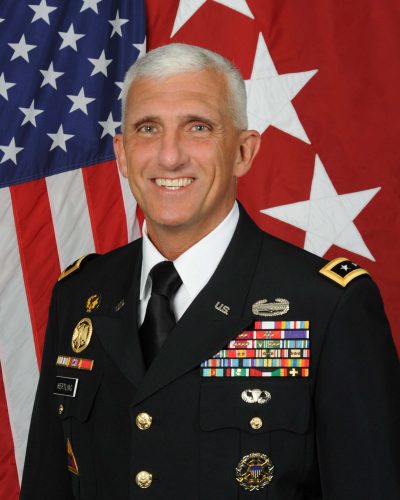
“You can’t lead others until you understand how to lead yourself” Mark Hertling returns to Explore The Space to discuss leadership through the prisms of character and resilience. His...
“The best antidote to a feeling of despair is progress, and that’s what we are seeing now” David Wallace-Wells is a Deputy Editor & climate change columnist with New York Magazin...
Drs. Avital O’Glasser, Vineet Arora, Charlie Wray and Mark Shapiro are pleased to present the following White Paper on Social Media, Podcasts, & Blogs on the ERAS Application for Residency/F...
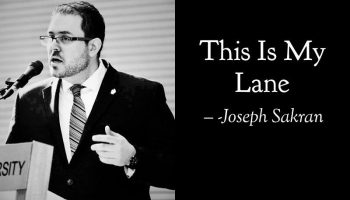
“Each and every one of us, we have a story to tell. Using that narrative to change the hearts and minds of Americans, that’s what will move the needle forward. ” Joseph Sakran is a g...
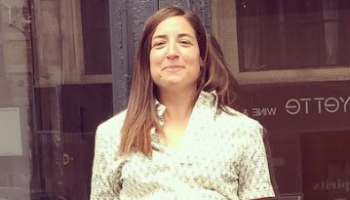
“There’s a lot more listening and amplifying that needs to happen that doesn’t involve a white man’s perspective” Caitlin Thompson is the creator and publisher of Racquet Magazine and ho...
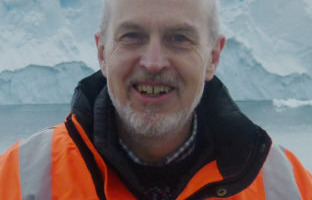
“I don’t think anyone expected the rates of melts that we found. It’s really alarming” Rob Larter is a marine geophysicist with the British Antarctic Survey who studies ice she...
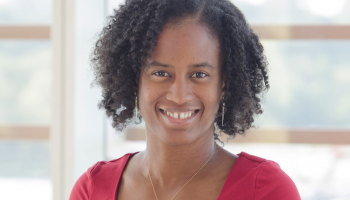
“I am in a unique position to be a voice where some people may not feel empowered to be that voice because of all that they have gone through” Jasmine Marcelin is a prototype modern physic...
“My favorite part of the job is finding something that City Hall is doing wrong that’s negatively affecting regular people who live here and hammering them over and over until they fix it....