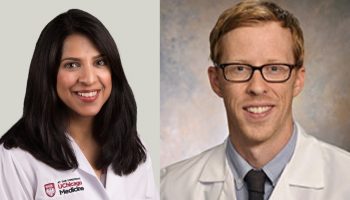
Grace Farris is a Hospitalist, Chief of Division of Hospital Medicine at Mount Sinai West, and an accomplished cartoonist with works featured in Annals of Internal Medicine & Buzzfeed. She joins us to discuss the role cartooning plays in her career, the potential of graphic art as an accelerant to learning, and some serious comics discussion. A unique conversation with an incredibly talented physician!
Key Learnings
Unpacking a Calvin & Hobbes essay that freaked your host out
Origins of the evergreen comics Dr. Farris creates
Robert Pearl is a physician leader in the United States of the highest order. He is widely published and frequently featured on multiple TV networks. He joins us in our first episode of 2019 to lay out the great challenges facing physicians and patients in America, his incredible passion to drive change, and how we can move the needle in the right direction.
Key Learnings
1. How his personal experiences with the problems of American healthcare led to the creation of his Forbes article
2. What it feels like to have doctors confessing their fears and frustrations to him in the wake of his book
3. Some of the limitations and barriers physicians deal with when trying to provide great care for patients
4. The passion and optimism that Dr. Pearl brings to the table and where he draws it from
5. The 5 fears doctors confess to other doctors
6. The great sense of loss that physicians have to deal with
7. Describing the 3 historical eras of medicine as a central dogma
8. Feedback Dr. Pearl has received from people outside of medicine, and how it connects with his own personal experiences
9. What are the key functions and entities needed to drive meaningful change?
In our final episode of 2018, we have a proper A-list MD, Dr. Gurpreet Dhaliwal, joining us. He is a master diagnostician who never fails to dazzle an audience with his process for evaluating and solving the most challenging cases. We discuss how he learns and trains, the need to look for “desirable difficulty” and how his mistakes are his most valuable tool.
Dr. Keith Murray is an Emergency Physician at University of Pittsburgh Medical Center and serves as Medical Director for Pittsburgh SWAT. He was a part of the first responder units that entered the Tree Of Life Synagogue during the mass shooting that occurred there on October 27th. He joins us to discuss becoming a SWAT Medical Director as well as his experiences before, during and after the shooting.
Key Learnings
1. Defining the role of a Medical Director for a SWAT team
2. Finding a niche in being part of a First Responder unit as a physician
3. The scope of responsibility for a SWAT Medical Director
4. The things Dr. Murray carries when going into the field
5. Drilling and training for a mass shooting
6. Notification about the Tree Of Life Synagogue shooting
7. What allows Dr. Murray to drive towards danger
8. Arriving at Tree Of Life and entering the building
9. Ready to fight versus ready to save lives: tactical versus medical awareness
10. Assessing the wound patterns from an AR-15 assault rifle
11. Rescuing two wounded SWAT officers and the end of the engagement
12. The post-incident debriefing and recovery process
13. What feels different in Pittsburgh after the shooting
Eric Byrnes comes back after writing a book and completing the Triathlon Across America. We cover transitioning from Major League Baseball, how his definition of mental toughness has changed, and creating Team Go-Hard.
Key Learnings
1. Eric & I start the podcast saying nice things about one another
Rabbi George Gittleman is the Senior Rabbi at Congregation Shomrei Torah in Santa Rosa, CA. Over the course of navigating crises like September 11th, the Sonoma County Wildfires, and the recent Tree of Life Synagogue shooting, he has run the gamut of experiences in leadership under pressure. He joins us to discuss the extraordinary insights he has gathered and the tools he uses to be at his best when it is needed most.
Key Learnings
1. Recognizing when the normal parameters around leadership go away
2. Learning to handle a community crisis and his own fight or flight response
3. Dealing with his community needs after 9/11 and what he learned to do differently
4. The desire to flee when the Sonoma County Wildfires broke out and how he pushed through
5. How Rabbi George overcomes the flight response so he can lead effectively
6. The power of using the emotion within an environment as a leadership tool
7. How self-discovery informs effective leadership
8. Recognizing and dealing with leadership failures
9. Disruptive behavior and how he overcomes it
10. The impact of mental agility and emotional stability in a crisis
11. The impact and evaluation of the recent Interfaith Ceremony
12. What professions would be good to cross-pollinate with around leadership
13. The personal cost of leadership, how he restores himself, and the importance of a good work environment
Dr. Taylor Brana is a Psychiatry resident and the host of The Happy Doc podcast. He joins us to discuss bringing fresh eyes to key challenges facing physicians, some key drivers of happiness & fulfillment, and creating his fantastic new project.
Key Learnings
1. The origins of The Happy Doc and asking the question “are there happy doctors?”
2. Focusing on both rebuilding and maintaining physicians at all stages of their careers, especially early on
3. What is consistent among medical students, residents, and attendings who are still happy in medicine
5. How the evolution of confidence, especially at career transition points, can build or erode happiness
6. Moving from an awareness phase to a solution phase
7. The importance of rebuilding culture through teams in medicine
8. The Happy Doc and emphasizing happiness, regardless of your profession
9. The Voice Project and expanding ways we can learn
Dr. Mary Brandt is a Professor of Surgery, Pediatrics, and Medical Ethics at Baylor College of Medicine in Houston, Texas and is in full-time clinical practice as a Pediatric Surgeon at Texas Children’s Hospital in the Texas Medical Center. She joins us to discuss the rapidly growing physician response to a tweet around gun violence in America and the #thisismylane movement.
Key Learnings
1. The power of doctors sharing pictures of the aftermath of gun violence with #thisismylane, #itisourlane, #itisourlane
3. What really enraged physicians in the wake of the NRA’s tweet about physicians and gun violence.
5. Using the power of these stories to move the conversation about gun violence from a political issue to a public health issue.
6. Stories of gun violence from a Pediatric Surgeon.
7. The disconnect between the perception and reality of what bullets do to a human body
8. How managing bullet trauma degrades physician wellness
9. The steps needed to push this movement forward in the right direction
10. The importance of setting a template of kindness around the conversation of gun control
11. Resolving the quandary raised by impulsive behavior, access to firearms, and gun-related death
12. What happens when a physician has a conversation around access to guns with their patients
13. Dr. Brandt creates the next viral hashtag! #asktosavealife
Dr. Nina Shapiro is a Professor of Surgery specializing in Pediatric Otolaryngology at UCLA. She is also a highly sought-after speaker on medical topics across the media spectrum. She joins us to discuss her new book “Hype” and how we discuss controversial topics with the public and with patients.
Key Learnings
1. Dealing with the question of “who are you to write a book about general health issues?”
2. The rocket fuel of hype in medicine and choosing the title of her book.
3. The value of rational conversations physicians can have with patients on topics their patients feel are important.
4. The missed opportunity of not explaining the science behind a medical recommendation.
5. Similar skills for communicating to a general audience and in the office with patients.
6. Avoiding a “me against them” dynamic and building one of shared decision-making.
7. What’s been the most popular topic for discussion on her book tour and are we training doctors to answer that question.
8. A surprising topic she was rarely asked about when meetings fans of her book.
9. Responding when doctors are told to “stay in your lane,” particularly around gun control advocacy.
10. Important takeaways and the road forward in dealing with the new world of medical information.
The article by The Jewish Nurse in the wake of the Pittsburgh synagogue shooting referenced in this episode can be found here.
Dr. Shapiro also released an article in Forbes Magazine just after our interview, please read it here.
We are proud to welcome you to the new home of Explore The Space. The url is the same, the site is entirely different. We’ve defined the 4 Pillars of Explore The Space, we’ve got the entire archive of 80 shows, there’s a new blog, more social media, and resources from the interface of healthcare and society. Please come look around www.explorethespaceshow and let us know what you think by emailing [email protected]. Please subscribe to the show and leave a rating and review on iTunes or wherever you download episodes. We couldn’t be happier with the new site and are delighted to have you stay on this great adventure with us.
Shawna Pandya is pluripotent. Whether it’s medicine, spacesuit testing, diving, or martial arts, she stays out on the sharp edge & has made a life out of pushing limits. Her stories and appr...
I was fortunate to present a talk entitled “Hospitalists In A Disaster” at the 2019 Society of Hospital Medicine Annual Meeting on March 25th, 2019. This is the audio version of that tal...
Bret Scher is a Cardiologist, author, and host of Diet Doctor podcast who has found a vital path in helping people understand the complex world of food through conversation and science. He joins us to...
Amitha Kalaichandran is a physician and a journalist who wrote a provocative and impactful piece in The Boston Globe about bullying in medicine. She joins us to discuss the astounding response to the ...
Drs. Vinny Arora, Charlie Wray and Mark Shapiro are proud to present the following White Paper on Social Media, Podcasts, and Blogs on a Professional CV. White Paper- Social Media, Podcasts and Blogs ...
Avital O’Glasser is a leading physician on Twitter who is helping to drive a rapidly evolving revolution in medical information exchange. She is also Associate Professor of Medicine & Associ...
Alin Gragossian was in the middle of her 3rd year as an Emergency Medicine resident when she became critically ill & required a heart transplant. She joins us 10 weeks after surgery to discuss h...
UPDATE: The Social Media and Professional CV White Paper can be found here! Feedback is welcomed White Paper- Social Media, Podcasts and Blogs on a Professional Curriculum Vitae Vinny Arora and Charli...
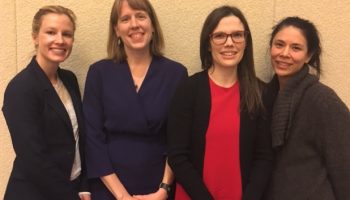
Emily Gottenborg, Christine Jones, Marisha Burden, Anna Maw
Emily Gottenborg, Christine Jones, Marisha Burden and Anna Maw are Hospitalists at the University of Colorado and all have had children at some point during their careers. They came on the podcast t...