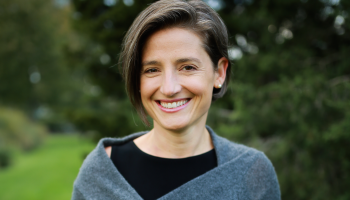
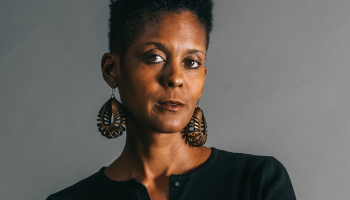
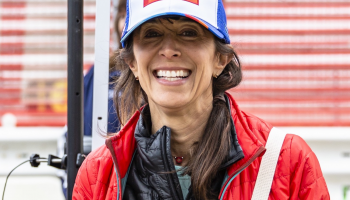
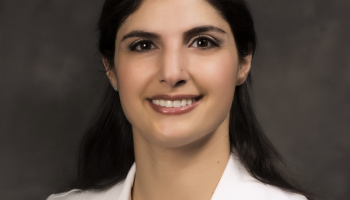
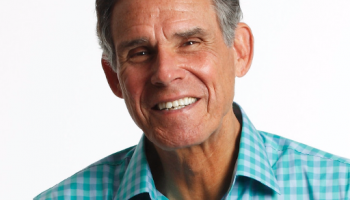
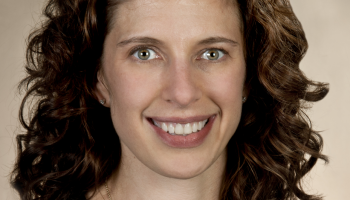
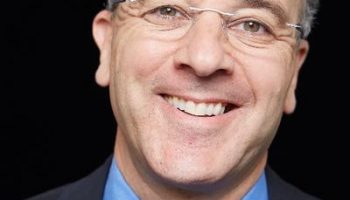
Nick Watts is a physician & Executive Director of Lancet Countdown. He joins us to discuss a defining issue for humanity: climate change. We discuss how climate change is a threat multiplier to human health, the role of the individual in responding to climate change, & how Game of Thrones & climate change are interconnected.
Key Learnings
1. How climate change became Nick’s calling after finishing medical training
2. Defining the scope of Lancet Countdown and goals of the project
3. Recognizing how climate change is a threat multiplier of determinants of human health and the response can serve as an enormous opportunity to impact health
4. The role of the individual in driving humankind’s response to climate change & tangible steps we can all take today
5. The incredible carbon footprint that healthcare has and the positive impact of reducing emissions in the industry
6. Increasing recognition that a low carbon footprint has a positive effect on public health
7. Why I don’t care about pushback to this effort or addressing climate change denial
8. Ways the Lancet is getting to a wider and wider demographic to increase engagement
9. How climate change is working its way into pop culture
10. The similarities between Game of Thrones and climate change
11. Our shared stories around the impact of climate change as a stimulus for change
I’ve been waiting for the right time and person to discuss the importance of coffee to our daily lives. Larry Istrail is a Hospitalist and a coffee aficionado (like your faithful podcast host) who has started a new coffee roasting company called Pheo Coffee. We discuss coffee as a ritual in medicine, connecting to our shared past through coffee, and the laudable intentions behind his business.
Key Learnings
1. What’s in our cups as we start the episode
2. The role of coffee in the day-to-day in the hospital
3. Why coffee is so tightly bound into the culture of healthcare
4. Surprising someone with a coffee
5. The origin of Pheo Coffee and the importance of social impact
6. Being affiliated with Watsi to help fund surgical procedures overseas & connecting each coffee purchase with a patient’s story
7. How Larry tries to make coffee delivery part of the overall experience of enjoying coffee & honoring medical history
Shoshana Ungerleider is a Hospitalist, founder of End Well & an educator focusing on end-of-life care. She joins us to discuss the evolution of her career, changing the narrative around how we talk about death, and her Oscar-nominated documentary “End Game.”
Key Learnings
1. The origins of Shoshana’s work and interest in end of life care and her feelings of “moral distress” in the ICU
2. Evolving from having an awakening to what’s important to something scalable and impactful on a population level
3. How she broke from the usual way messages are exchanged in healthcare into public speaking, writing, and movie-making
4. Medical lingo and how it derails communication with patients
5. Is she experiencing any pushback to her work around end-of-life care?
6. The goal behind End Well and creating documentaries like “End Game”
7. The difficulty that comes when a patient is sick & there is lack of clarity around goals of care
8. Barriers posed by social determinants of health, racial and gender biases associated with end of life care
9. What it’s like to find out you’ve been nominated for an Oscar
10. How the film has allowed for the creation of a toolset for discussing end of life care as part of a larger call to action
Links
Shoshana’s home page: https://www.shoshanaungerleider.com
Aimee Gardner has a PhD in Organizational Psychology and is Assistant Dean of Evaluation & Research at Baylor College of Medicine. She joins us for a provocative discussion of how residency programs select medical students. This is a fraught issue for our profession and the concepts around recruiting are generalizable across any organization.
Key Learnings
1. How we connected during the controversy surrounding standardized tests for medical students.
2. The major criteria that make a candidate attractive to a residency program
3. Defining Step 1 of the USMLE and the stakes and stress associated with it
4. How the exam moved from a standard pass-fail to a variety of purposes it is neither intended nor designed for.
5. The rational steps that should be taken when assessing whether a candidate is right for any type of organization
6. The implications that the mis-application of USMLE has on fairness and diversity as well as why other industries stay away from standardized tests
7. The risks and stresses that USMLE Step I puts medical students through
8. The challenges that programs making selections face in this same equation
9. A hard look at the unstructured way resident selection is done now
10. Building a selection process built around a fair, equitable and scientific manner
11. The components & metrics of a rigorous selection process that apply to medicine and across any industry
12. Facing the harsh reality around effectiveness of what is currently compiled by medical students in their applications
13. The search for new criteria and where to look, including a place you might not expect
14. How much enthusiasm is there to change the current processes
15. Ensuring proper attention is paid to socioeconomics, gender and racial equity in how residency classes are selected
Ingrid Nembhard is an Associate Professor of Health Care Management at the University of Pennsylvania and she is the definition of a pluripotent researcher, teacher & mentor. She studies and coaches around how we can improve team-based culture & organizational learning. We discuss the importance of feeling part of a high-performing team, how team-based culture forms, and how it translates into patient-centered care. This is riveting stuff & her insights are amazing!
Key Learnings
1. What gets Ingrid up in the morning and what brought her to healthcare
2. Being a pluripotent scholar, what “Eureka” moments her down the path of healthcare?
3. The experience of stepping into healthcare organizational improvement and the reception when she starts working with a new team
4. Why it’s important to be at the front lines when she starts a project
5. The creativity that comes from “dissatisfied” people and the value of context
6. Understanding an organization’s culture to determine what’s possible, relevant, and useful
7. Organizational learning and the impact of new knowledge, especially in healthcare
8. How the intersection of organization culture and learning intersect to help drive progress
9. Why team-based culture is a common topic Ingrid is called to help with and a pivotal issue in the success of a healthcare organization
10. Hierarchy vs teamwork and the impact of how team members feel about their work
11. The challenge for a physician who trained in a hierarchical environment who now is joining an organization that focuses on teamwork
12. The vital nature of leadership in driving psychological safety and developing culture
13. Recurring strengths that healthcare organizations can build on
14. The central dogma of decision-making in healthcare
15. Ingrid’s goals for the future and places where her impact will be greatly felt
Mark Hertling dedicated 37 years of service to the United States Army, serving in two wars before retiring as a Lieutenant General. He then stepped into developing physician leaders and has found tremendous success in this crossover. His book “Growing Physician Leaders” is superb and is applicable across many fields, not just medicine. We discuss his unique post-Army career, where the tension points exist within medical leadership, and how his curriculum works.
Key Learnings
1 Transitioning from the United States Army into medical leadership development
2. Why a retired General would be a good fit for medicine, according to Disney
3. First impressions looking under the hood & the importance of serendipity
4. The value of interdisciplinary learning to develop trust
5. First impressions of leadership in healthcare as he started his work, especially what is not working
6. Gaps and tension points in healthcare leadership and the reasons they exist
7. Overcoming “What the hell is the hospital trying to make us do?”
8. The value of continuing, lifelong leadership training
9. Helping physicians reclaim the aspirational part of their work as a component of leadership training
10. Examining tension between servant leadership (physicians) vs transactional leadership (administration)
11. The importance of “We”
12. The granular components of learning and connecting in healthcare leadership training (I loved this part!)
13. The extraordinary opportunity medicine has to tap into a deep and broad well of potential leaders
14. How leadership training ripples into every component of life including relationships and burnout mitigation
Peter Hotez is a Professor of Pediatrics at Baylor College of Medicine and Dean of the National School of Tropical Medicine. He is the world’s authority on vaccine science not simply because of scientific background, but because of his active and valuable advocacy work across many platforms. He joins us to discuss the measles explosions in the United States and Europe, the devastation wrought by the anti-vaccine movement
Key Learnings
1. Why your faithful host is angry
2. The 3 vaccines that are being marginalized in the United States
3. The 3 major forces behind the current public health crisis
4. The power of the anti-vaccine movement & the lack of clarity behind it’s goals and funding
5. The impact of vaccine exemptions at the state level
6. The lack of a powerful & organized pro-vaccine advocacy
7. Dr. Hotez’ evolution from scientist to advocate, finding his voice, & telling a very personal story
8. The pressing need for healthcare providers to become savvy with TV, writing, and social media
9. Realizing the incredible power that physicians have when they step forward on social issues
10. What’s it’s like to go up against the anti-vaccine lobby and the need for more support from physicians who may be either disinterested or afraid.
11. The next steps needed to begin to stem the tide
12. The value of educating the next generations of healthcare providers in policy, advocacy, media & importance of meeting them where they live.
13. The alarming trajectory of measles and the concern it will move through Europe, Asia, Africa, and South America
Links
Dr. Hotez’ website: www.peterhotez.org
Dr. Hotez on Twitter: @peterhotez
New York Times article: https://www.nytimes.com/2019/02/06/us/measles-outbreak.html
Crafting Your Scientist Brand: https://journals.plos.org/plosbiology/article?id=10.1371/journal.pbio.3000024
Dr. Hotez’ book “Vaccines Did Not Cause Rachel’s Autism” : https://www.amazon.com/Vaccines-Did-Not-Cause-Rachels-Autism/dp/1421426609
Laurie Garrett is a Pulitzer Prize-winning journalist who wrote an extraordinary article in The British Medical Journal on gender equity in healthcare called “The Trouble With Girls.” She joins us to discuss the deep inequities she describes, the drivers behind them today and the extraordinary response the paper engendered.
It’s Super Bowl week, so it’s time to discuss Chronic Traumatic Encephalopathy in NFL players. Visar Berisha is an Associate Professor of Engineering at Arizona State University, focusing on speech and hearing science. He and his team completed an amazing study looking at changes in language complexity in NFL players. We discuss the study, it’s findings, and the extraordinary potential for this work in neurodegenerative disease.
Key Learnings
1. The cloud that hangs over the National Football League
2. Looking at neurological health and searching for biomarkers of cognitive decline through the complexity of speech generation
3. Creating a philosophy of lab as incubator for multidisciplinary neurodegenerative disease
8. Using these tools both as a predictive model for CTE and a return-to-play modality for concussion
9. Ongoing study with the NCAA and outreach from former NFL players
10. What comes next with this study template across multiple disease processes
11. How Dr. Berisha and I connected in the first place
Links
The study in “Brain and Language:” https://auralanalytics.com/wp-content/uploads/2018/09/Longitudinal-changes-in-linguistic-complexity-among-professional-football-players.pdf
The New York Times article: https://www.nytimes.com/2017/05/29/health/cte-brain-inuries-football.html
Dr. Berisha’s website: http://www.public.asu.edu/~visar/
Kristin Wikelius is a Senior Policy Director with United States of Care and she joins us to discuss the vision of the organization, how illness and sickness can provide common ground for progress, and why Medicaid at the state level is a good place to start
Key Learnings
1. What is United States of Care and what is the mission & vision
2. Health and illness as a societal leveler independent of any other considerations
3. Initial goals of shifting healthcare debate from something defined by a single policy or party to something mission-driven
4. Defining Medicaid as a cornerstone of American healthcare
5. Dispelling misconceptions and negative connotations of Medicaid through personal stories.
6. Why a focus on Medicaid at the state level is the right approach in the near-term
7. How states are responding to possibility of Medicaid buy-in approach
8. What does success look like in this first phase & what’s working so far
9. Where has pushback come from & how are physicians responding
10. Recognizing that partisan divides at state level are much less pronounced than federal level & how this is an accelerant for progress
11. The value of elevating the stories we all carry around healthcare as a driver of progress
“Be able to acknowledge the limits of knowledge, be authentic, and invitational to other perspectives on the edge of the unknown” Alexa Miller is an artist and creator of Arts Practica, wh...
“We have a human right to have a child, to not have a child, and to parent a child in safe and healthy communities.” Dani McClain is a journalist and writer who has been covering the issue...
Rebecca Kotch is the Director of Rock The Ride, which is a fundraiser for gun violence prevention efforts taking place this June. She stepped into being an activist around gun violence after the Yount...
“The key is always trying to get better, do better and be better and figure out how to bring people along on the journey.” Arghavan Salles is a surgeon and a PhD who has an incredible fan ...
“All we are doing here is feeding the squeeze if we don’t turn this thing back” Eric Topol is one of the great bell-weathers in medicine, his new book “Deep Medicine” loo...
“Being courageous is taking that step confidently without any guarantee of a result” Valorie Kondos-Field is one of the greatest coaches in history at any level, ever. She won 7 NCAA champ...
Megan Ranney is an Emergency physician & a national leader in the gun violence prevention movement. She joins us after working overnight in the ED to discuss this growing movement, the gag rule on...
“Doctors are looking for a place to put bigger ideas” Bryan Vartabedian is a bon vivant physician on social media. He’s been active on Twitter for over a decade, he blogs, he podcast...
“On the path to achieving something extraordinary, you will do extraordinary things.” Rob Mitchell spent a career serving in the Navy SEALs & the CIA. He has since built a lengthy list...